

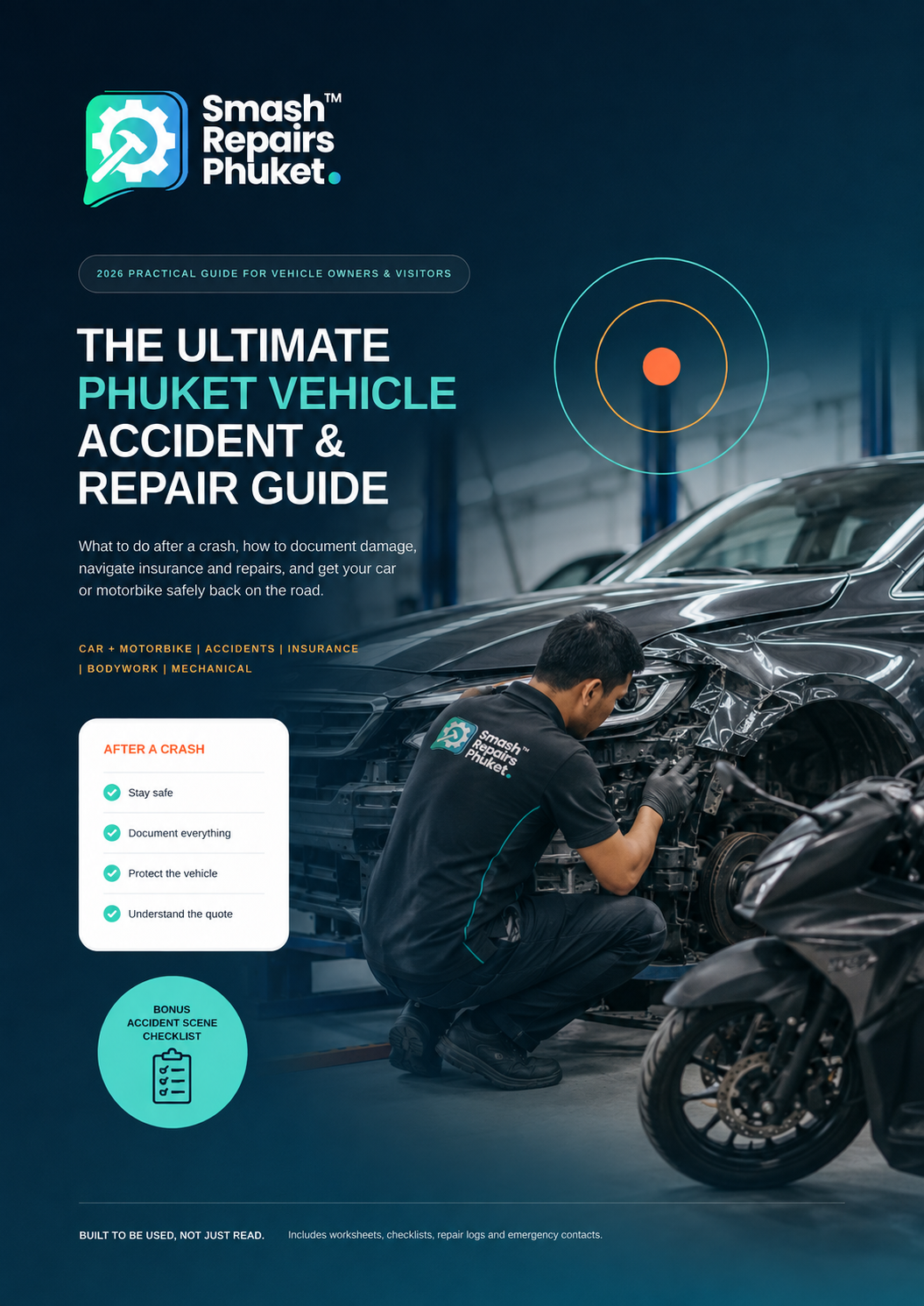
Ultimate Phuket Vehicle Accident and Repair Guide – 2026 Edition
$169.00 Original price was: $169.00.$88.00Current price is: $88.00.
What to do after a vehicle accident in Phuket – before the stress, confusion and repair decisions begin.
The Ultimate Phuket Vehicle Accident & Repair Guide – 2026 Edition is a practical 60-page handbook for car and motorbike owners, residents and visitors. Learn how to make the scene safer, document damage, prepare an insurance claim, understand repair estimates and protect yourself from costly surprises.
Includes a Master Accident & Repair Checklist, Accident Scene Record, Evidence Log, Repair Estimate Comparison, Safety-System Inspection Sheet, Motorbike Crash Inspection, Repair Progress Log, Cost Authorisation Record, Rental Vehicle Incident Sheet and Emergency Contact Guide.
When the Damage Is Real, the Next Step Should Be Clear.
A vehicle accident can happen in seconds.
What follows can take days or weeks: photographs, police or emergency calls, insurance questions, towing, damage assessment, repair estimates, approvals, parts, paintwork, mechanical checks and finally getting the vehicle safely back on the road.
The Ultimate Phuket Vehicle Accident & Repair Guide – 2026 Edition was created to help you navigate that process with a clear plan.
This practical 60-page digital guide explains what to do after a crash, how to preserve useful evidence, how to understand visible and hidden damage, what to look for in a professional repair estimate and how to stay in control from the accident scene through to final handover.
It is built to be used, not just read.
What You Will Learn
Inside the guide, you will learn how to:
- Prioritise people and scene safety immediately after an accident
- Know what information and photographs to collect
- Build a clear accident and insurance claim file
- Understand the difference between visible and hidden vehicle damage
- Recognise when a car or motorbike may need recovery instead of being driven or ridden
- Prepare questions for your insurer before authorising repairs
- Read and compare repair estimates more intelligently
- Understand repair-versus-replacement decisions
- Understand bodywork, panels, paint matching and refinishing
- Recognise frame, suspension, wheel, tyre and brake concerns
- Understand mechanical and electrical damage after an impact
- Check motorbike-specific crash damage
- Understand what a professional repair process should look like
- Manage communication, approvals, collection and final handover
- Understand supplements, additional damage and repair variations
- Handle rental-vehicle incidents more carefully
- Inspect the vehicle before accepting it back
- Keep the right repair, invoice and warranty records afterwards
More Than an eBook. It Is an Accident & Repair Toolkit.
Accidents are not the moment to rely on memory.
That is why the guide includes practical worksheets, logs and checklists that can be saved to your phone or printed before you need them.
Included Worksheets & Tools
- Accident Scene Record
- 12-Photo Evidence Method
- Evidence & Contact Log
- Insurance / Claim Contact Log
- Repair Estimate Comparison Sheet
- Safety-System Inspection Record
- Post-Impact Diagnostic Notes
- Motorbike Crash Inspection Sheet
- Repair Progress Log
- Handover Checklist
- Cost & Authorisation Record
- Rental Vehicle Incident Checklist
- 7-Day & 30-Day Follow-Up Guide
- One-Page Master Accident & Repair Checklist
- Thailand Emergency & Visitor Contact Reference
The First Minutes After an Accident
The guide begins with the decisions that matter most.
Before thinking about bodywork or repair prices, you need to think about people, traffic, fire, fuel, visibility and whether the vehicle is safe to move.
You will get a practical sequence for:
- Checking for injuries
- Reducing immediate danger
- Calling emergency services when required
- Protecting the accident scene
- Recording useful evidence
- Exchanging details
- Contacting the insurer, rental company or vehicle owner
The goal is simple: prevent a bad situation from becoming a second accident.
Document the Damage Properly
A few random close-up photos are not the same thing as an accident record.
The guide shows you how to photograph the incident in layers, including:
- Wide scene photographs
- Vehicle positions
- Registration plates
- Road and weather conditions
- Damage close-ups
- Secondary damage
- Dashboard warnings
- Motorbike controls, forks, wheels and contact points
It also includes a practical 12-photo minimum to help you create a more complete record when conditions allow.
Visible Damage Is Only the Beginning
A cracked bumper, damaged fairing or dented panel can be the most obvious part of the impact without being the most important part.
The guide explains why collision damage may also affect:
- Mounting points
- Cooling systems
- Suspension
- Steering
- Wheel alignment
- Brakes
- Lighting
- Sensors and cameras
- Electrical systems
- Frame or structural alignment
A glossy panel is not enough if the vehicle underneath is not right.
Insurance & Claim Preparation
Insurance policies differ, and the safest approach is to treat your own policy and insurer instructions as the authority for your claim.
The guide helps you prepare useful questions before authorising work, including:
- Does the insurer need to inspect the vehicle first?
- Is a police report required?
- Can you choose the repairer?
- Is towing or recovery covered?
- What deductible or excess applies?
- What basis is used for replacement parts?
- Who approves additional damage discovered after disassembly?
You will also receive a claim-file checklist and contact log so important instructions and reference numbers do not disappear into old messages.
Understand a Repair Estimate Before You Approve It
The lowest number is not automatically the lowest-cost repair.
A useful estimate should help you understand scope, not just price.
The guide explains common estimate terminology including:
- Repair
- Replace
- Remove and refit
- Paint and refinish
- Blending
- Measurement and alignment
- Diagnostics
- Supplemental damage
It also gives you 10 questions to ask before approving repairs and a worksheet for comparing multiple repair estimates side by side.
Bodywork, Panels & Paint
Collision repair is more than making a dent disappear.
The guide looks at:
- Repair-versus-replacement decisions
- Panel gaps and alignment
- Mounting points
- Dents and bumper damage
- Surface preparation
- Colour matching
- Blending adjacent panels
- Clear coat and finish quality
- Rust, water and Phuket’s coastal environment
Frame, Suspension, Wheels & Brakes
Impact forces travel through a vehicle.
A wheel strike can affect suspension geometry. A side impact can disturb mounting points. A motorbike fall can twist bars, forks or controls without creating dramatic-looking body damage.
The guide gives you warning signs to look for and explains why measurement can matter more than guessing.
Mechanical, Electrical & Electronic Damage
Modern vehicle repair increasingly combines bodywork with mechanical and electronic diagnosis.
The guide covers post-impact concerns involving:
- Cooling systems and fluid leaks
- Air conditioning
- Battery and charging systems
- Engine mounts
- Exhaust and drivetrain components
- Lighting
- Wiring and connectors
- Parking sensors
- Cameras
- Dashboard warning lights
Motorbike-Specific Crash Damage
A motorbike can be significantly affected by a low-speed drop because controls, engine cases, exhausts, wheels and bodywork are exposed.
The guide includes dedicated motorbike checks covering:
- Handlebars and controls
- Levers and mirrors
- Forks and triple clamps
- Front and rear wheels
- Brakes
- Fairings and bodywork
- Engine cases
- Foot controls
- Exhaust
- Swingarm
- Frame and subframe
What a Professional Repair Process Looks Like
The guide walks through a sensible repair journey from intake to quality control:
- Vehicle intake
- Damage assessment
- Estimate
- Approval
- Disassembly
- Supplement if additional damage is discovered
- Repair or replacement
- Paint, mechanical and electrical work
- Reassembly
- Quality control
You will also learn why repair estimates sometimes change after damaged panels are removed, and how a healthy variation process should be documented and approved.
Before You Accept the Vehicle Back
Collection is the end of the workshop phase, not the end of your responsibility as the owner.
The guide includes a detailed handover checklist covering:
- Paint and body alignment
- Lights and controls
- Windows, locks and handles
- Parking sensors and cameras
- Warning lights
- Steering and alignment
- Braking feel
- Leaks, noise and vibration
- Motorbike controls and wheel alignment
- Invoices and repair warranty information
The guide also includes a 7-day and 30-day follow-up so you know what to pay attention to after the repair is no longer fresh in your mind.
For Visitors & Rental Vehicles in Phuket
Visitors can face an extra layer of complexity after an accident: unfamiliar roads, language barriers, travel insurance, rental agreements and a vehicle they do not own.
The guide contains a dedicated rental-vehicle incident sheet covering:
- Rental company contact details
- Booking and vehicle information
- Insurance contacts
- Police references
- Towing authority
- Repair authority
- Instructions received
Bonus: One-Page Master Accident & Repair Checklist
When you actually need the guide, you may not want to read an entire chapter.
The bonus one-page checklist condenses the process into four practical stages:
- At the scene
- Before repair
- Before collection
- Records to keep
Save it to your phone so you have prompts when the situation is stressful.
Who Is This Guide For?
This guide is designed for:
- Car owners in Phuket
- Motorbike and scooter owners
- Long-stay residents
- Expats
- Visitors driving or riding in Phuket
- Rental-car customers
- Rental-motorbike customers
- Anyone dealing with collision, body, paint, suspension, mechanical or electrical damage
You do not need to be a mechanic or insurance specialist.
You simply need to know what to record, what to ask and what to check.
What You Receive
- Format: Digital PDF eBook
- Length: 60 pages
- Edition: 2026
- Language: English
- Coverage: Cars + motorbikes
- Chapters: 14 practical chapters
- Bonus: Master Accident & Repair Toolkit
- Included: Worksheets, checklists, evidence logs, repair records and emergency contacts
Car or Motorbike Damaged in Phuket?
Whether the incident is minor cosmetic damage or a more involved collision repair, the first step is understanding what happened and what the vehicle actually needs.
Get the Ultimate Phuket Vehicle Accident & Repair Guide – 2026 Edition and keep a practical accident-to-handover plan with you.
If your vehicle is already damaged, Smash Repairs Phuket can assess the vehicle and provide a repair estimate.
WhatsApp / Phone: +66 96 274 0319
Frequently Asked Questions
Is this guide only for serious accidents?
No. It is useful for everything from minor body damage and parking incidents through to more significant collision repairs.
Does the guide cover both cars and motorbikes?
Yes. It covers general accident and repair principles for both, with a dedicated section and inspection sheet for motorbike-specific crash damage.
Does the guide tell me what my insurance policy covers?
No. Insurance policies differ. The guide helps you organise the claim, identify useful questions and keep better records, but your insurer and policy documents remain the authority for your individual coverage.
Can I use the worksheets on my phone?
Yes. The PDF can be stored on your phone or tablet, and the practical worksheets can also be printed.
Does it include emergency contact information?
Yes. The guide contains a Thailand emergency and visitor contact reference, including police, medical emergency, Tourist Police and insurance-regulator contact information.
Does this replace professional mechanical or structural inspection?
No. It helps owners recognise concerns and ask better questions. Structural, mechanical, electrical, braking, steering and safety-system concerns should be assessed by suitably qualified professionals.
Important: This guide provides general educational information only and is not legal, insurance, medical or professional vehicle-repair advice. Accident circumstances, insurance policies, rental contracts, vehicle designs and repair requirements vary. Follow emergency-service instructions, applicable Thai law, your insurer’s requirements and professional repair advice for your individual situation.
Be the first to review “Ultimate Phuket Vehicle Accident and Repair Guide – 2026 Edition” Cancel reply
You must be logged in to post a review.
Reviews
There are no reviews yet.